Hidden Gems (or Boulders!) Found in the 2021 Legislative Session
by Karin M. Smith, MBA, SFO, CFE, Consulting Partner
Posted on August 24, 2021
The legislative session of 2021 was like no other in recent history. The session lasted a record 171 days going down to the wire on June 30, 2021. During the 2021 session, 1,774 bills were introduced and 474 bills passed the legislature and were sent to the Governor for consideration. While some were vetoed, a record number were passed. School districts have been carefully evaluating the impact of the budget and the policy adopted as part of the budget bill plus the plethora of all the other bills that will impact the K12 world.
There were a few bills that missed the headlines that will definitely impact some of the financial operations of the school districts. The following certainly is not intended to be comprehensive review of the legislation, rather, these are just a few of the outcomes that may not have garnered much attention.
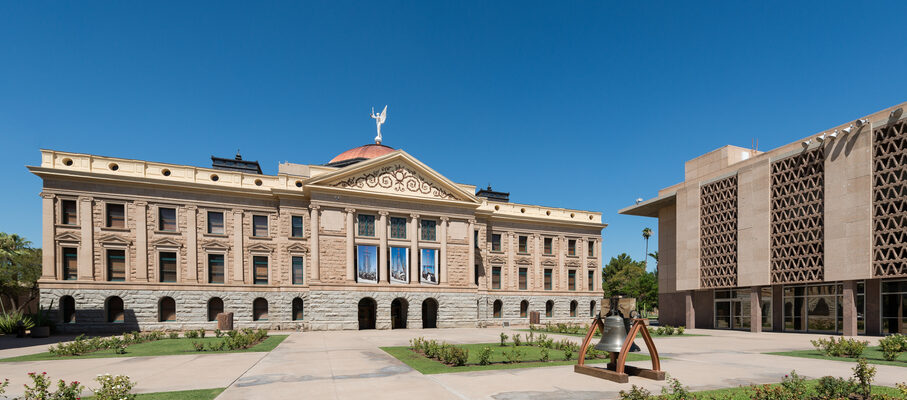
Let’s sift beyond the School Facilities Board changes, open enrollment requirements and new and innovative ways of delivering instructional time and talk about a few of the less notable, yet important items to be aware of. The general effective date for the legislative changes is September 29, 2021; however, legislation with a direct impact on school finance formulas can be applied to the entire fiscal year beginning July 1.
SB1139 – Classroom Site Fund
Proposition 301 was originally passed by voters in November 2000. In addition to other provisions, the most notable component of the original Prop 301 legislation is the increased state sales tax from 5.0 percent to 5.6 percent. The .6 percent increase became a dedicated revenue source for education. In 2020, the State Legislature extended this sales tax for an additional 20 years through 2041. During this legislative session, the legislature made further modifications to provide flexibility and expanded use of the fund. Below is a summary of the changes made to ARS §15-977:
- Modifies the purposes for which monies from the Classroom Site Fund must be spent to add “student support services” (as defined in USFR Function 2100).
- Specifies that teacher compensation must include a base pay and a performance pay component.
- Deletes the requirement for school districts to allocate 40 percent of the monies received from the Classroom Site Fund for teacher compensation increases based on performance and employment related expenses, 20 percent of the monies for teacher base salary increases and employment related expenses, and 40 percent of the monies for maintenance and operation purposes.
- The performance based compensation system adopted by school district governing boards is no longer required to have individual teacher performance account for 33 percent.
HB2018 – Schools; Audits; Financial Records; Budget
This bill received very little attention but will certainly impact the school district checklists related to their budget and audit process. While this bill does remove a few things from these ever growing to do lists, a few items were shifted to be the responsibility of the school district. Here is a summary of the key components to this bill.
- Removes the requirement that school districts file proposed, revised, and adopted budgets with the county school superintendent.
- School districts and charter schools are required to send a copy of audit reports to the county school superintendent and the Arizona Department of Education (ADE).
- ADE is required to make the audit reports available on its website.
- School district and charter school governing boards are required to publicly accept all audits and compliance questionnaires by roll call vote.
- If a school district fails to establish and maintain compliance with the uniform system of financial records, the Auditor General is required to report that district to the State Board of Education, in addition to ADE, and is required to detail the deficiencies in writing in the report.
HB2020 – Schools; Child Care; Reduced Fees
Another bill with little notoriety was HB2020 which established ARS §15-120.01. While this bill does provide for the opportunity for school districts to offer a reduced fee for public school employees who receive child care services from the district, it is important to not lose sight of any IRS requirements. Below is a summary of the newly enacted ARS §15-120.01:
- A public school that provides or contracts for childcare services is permitted to reduce the fee a public school employee pays for the child care services if the cost the public school pays for those services is not grossly disproportionate to the total consideration received from the employee.
HB2268: Schools; Total Compensation Statements
This bill established ARS §15-189 which requires school districts to provide a total compensation statement to its employees each year. The following is a summary of the data that must be included:
- Base salary and any additional pay
- Medical benefits and the value of any employer-paid portions of insurance plan premiums
- Retirement benefit plans, including social security
- Legally required benefits
- Any paid leave
- Any other payment made to or on behalf of the employee
- Any other benefit provided to the employee
HB2210 – School Functions; Food; Beverages
The final bill in this review is one that will certainly pique the interest of many districts. I would estimate that 4 out of 5 readers have asked their auditors in the past “can we buy food for our employees?” Back in 2010, the Arizona Attorney General’s Office issued an opinion (I10-003) that tightened up the ability for districts to provide food to employees when not on travel status. ARS §15-342 has been extended to include subsection 39 which includes the following:
- Subject to policies adopted by the Department of Education, school boards are authorized to provide food and beverages at school district events, including official school functions and trainings.
Implementing these bills, and the many, many other laws that are facing Arizona schools will no doubt be a challenge. Staying informed of these requirements will help school business officials navigate the ever changing waters of compliance.
The 2022 fiscal year is here…2023 is around the corner, keep your head up and keep moving forward!
For a print-ready version of this article: Click here